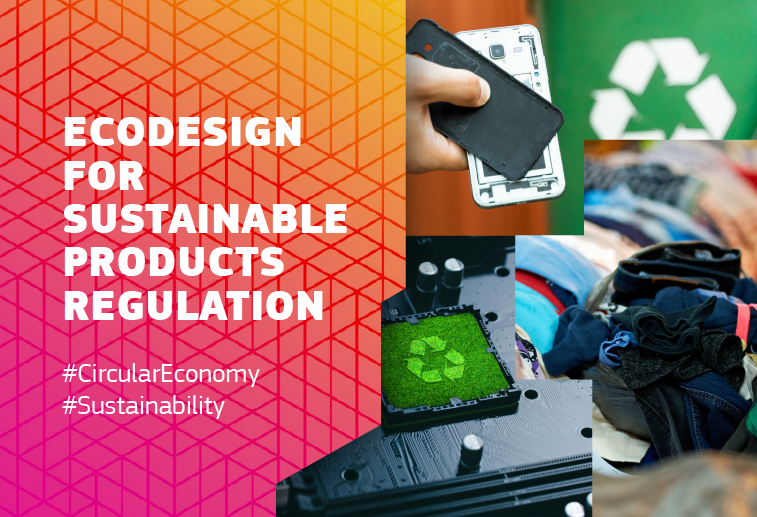
European Commission Ecodesign for Sustainable Products Regulation source graphic.
European Commission / credit not listed on source page · Original source · View full size ↗
Image provenance & review status
Directly represents the regulation framework discussed in the article, including textiles among circular-product examples.
Source date: 2024-07-19 · Retrieved: 2026-09-16.
Official article Open Graph image; it contains the regulation title and was retained unchanged. Publication rights: owner review pending.
What happened
The European Commission reported on July 19, 2024 that the Ecodesign for Sustainable Products Regulation had entered into force the previous day. Its explanation described a framework for future product-specific performance and information requirements, including digital product passports for regulated goods. It also identified measures concerning unsold textiles and footwear. A Commission implementation page records July 18 as the entry-into-force date and separately lists later implementation milestones. The event was the start of a legal framework; the Commission did not say that every garment already needed a passport on that day or that all future product rules had been finalized. [1] [2]
Interpretation
For fashion operators, the useful early signal was a shift toward product-level traceability and decisions about unsold stock. Even before detailed requirements arrive, a brand can map where material composition, supplier, repairability, and inventory-disposal data live and who owns each field. That is an operational preparation inference, not legal advice or a claim that one system will satisfy every later rule. The framework could affect design, sourcing, merchandising, and returns, but the costs and timetable depend on subsequent product measures. Beauty companies also fall within the wider physical-goods conversation, yet this brief’s concrete textile example should not be extended automatically to cosmetics. [1] [2]
What to watch
Follow the Commission’s working plans, delegated measures, product scope, and implementation dates before attaching a compliance deadline to a particular item. Check whether data collected for a passport can be validated by suppliers and maintained through product changes; an attractive consumer label is only as reliable as its records. Monitor the treatment of unsold goods separately from information requirements. The historical lesson is that a broad EU framework came into force in July 2024 and gave companies a reason to inspect their product-data systems. It does not establish that every contemplated measure was already in operation or that a given brand met its obligations. [1] [2]
Evidence limits
Two Commission pages agree on entry into force and sequence; they are same-institution sources, not independent compliance analysis.
- Current regulatory obligations require later measures and jurisdiction-specific review.
- No brand adoption or product-passport deployment measured.
Sources & checked claims
- Ecodesign becomes the norm for products in the European UnionEuropean Commission · Source date: 2024-07-19 · Retrieved: 2026-09-16
Supports: July 19 report of previous-day entry into force future product requirements digital product passports unsold textile measures
Opened official Commission notice; distinguished framework from subsequent product rules.
- Implementing the Ecodesign for Sustainable Products RegulationEuropean Commission · Source date: not established · Retrieved: 2026-09-16
Supports: July 18, 2024 entry into force separate later implementation milestones
Opened official implementation timeline; page is maintained and has no single original publication date.
- Source publication
- 2024-07-19
- Event date
- 2024-07-18 (effective-date)
- Discovered / retrieved
- 2026-09-16
- Prepared
- 2026-09-16
- Site published
- Not established in the source record — draft retained
- Timeline date basis
- event
- Rewrite revision
- 1