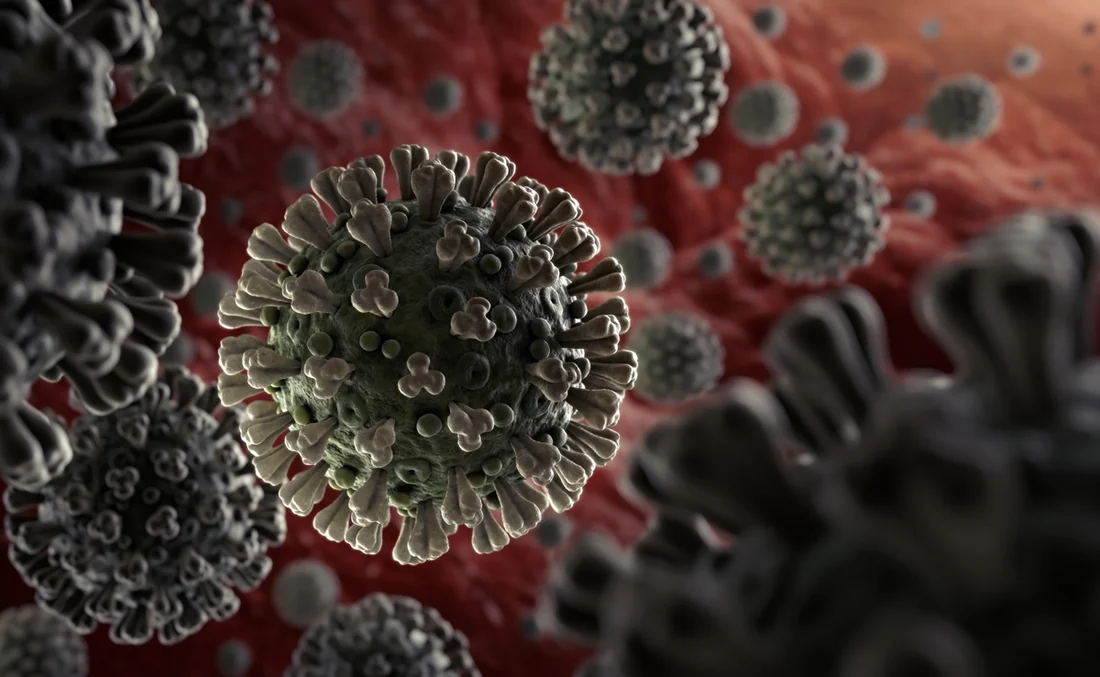
cdn.who.int · Original source page

Image provenance
Inherited source visual. Image capture date and exact event relationship were not established again in this expansion. Owner publication review pending; credit does not grant permission.
Original assetThe signal
Signal Atlas's 06 Healthcare sector anchors many other sectors' series to a single Wednesday. According to the World Health Organization's own COVID-19 timeline, published 27 April 2020, the WHO Director-General stated on 11 March 2020 that, "deeply concerned both by the alarming levels of spread and severity, and by the alarming levels of inaction, WHO made the assessment that COVID-19 can be characterized as a pandemic." That sentence characterises a disease's spread; it is not the same instrument as a Public Health Emergency of International Concern, the formal mechanism WHO had already invoked in late January 2020, before the March pandemic characterisation.
The evidence
WHO's timeline is the organisation's own retrospective record of its sequence of actions, compiled after the fact rather than a live transcript, so it documents what was said and when rather than restating the epidemiological detail behind the decision; the 11 March entry does not itself give case or death counts as of that date. WHO's ongoing COVID-19 hub page, as retrieved on 16 September 2026, still headers the disease as a "pandemic," showing the March 2020 terminology persisted as the organisation's working description years later rather than being revised or withdrawn. For a cross-industry site, the 11 March date is useful less for its epidemiological content than for its precision: it is a single, well-documented point that other sectors' series, travel, retail, remote work, monetary policy, can each be dated against, whatever each sector's own inflection actually was.
Timeframe and confidence
This is an editorial reading: that the statement was made on 11 March 2020 is well corroborated and not in dispute. Using it as a universal before/after marker for every other sector's series is an editorial convenience, not a claim that every sector's own inflection happened on that exact date; retail, travel and labour-market series each show their own timing, sometimes weeks before or after the WHO statement.
What would change the reading
Evidence that a given sector's series had already inflected clearly before 11 March 2020 would argue against using the WHO statement as that sector's own reference date, even while it remains a defensible common anchor for comparing several sectors against one another.
- Does a cited "pandemic declaration" date refer to WHO's own characterisation, or to a separate national emergency declaration?
- Is a sector's inflection point actually dated to March 2020, or is that date standing in for a change that happened earlier or later?
- What formal WHO instrument, if any, changed on 11 March 2020, as distinct from the descriptive language used that day?
Treated narrowly, 11 March 2020 documents a form of words WHO used to describe a disease's spread; treated as a reference line across a portfolio of unrelated industry series, it is a shared dateline whose usefulness lies in being precisely known, not in having caused every change later dated near it.
Source trail
- WHO Timeline — COVID-19www.who.int · Source publication: 2020-04-27 · Retrieved 2026-09-16
Records WHO's own quoted 11 March 2020 statement characterising COVID-19 as a pandemic.
- Coronavirus disease (COVID-19) pandemicwww.who.int · Source publication: not established · Retrieved 2026-09-16
Living hub page showing WHO's continued use of pandemic terminology as retrieved in 2026.
- Event date
- 2020-03-11
- First source date
- 2020-04-27
- Source-record publication
- Not supplied — draft retained
- Preparation
- 2026-09-16