swikblog.com · Original source page
Image provenance
Inherited source visual. Image capture date and exact event relationship were not established again in this expansion. Owner publication review pending; credit does not grant permission.
Original assetThe signal
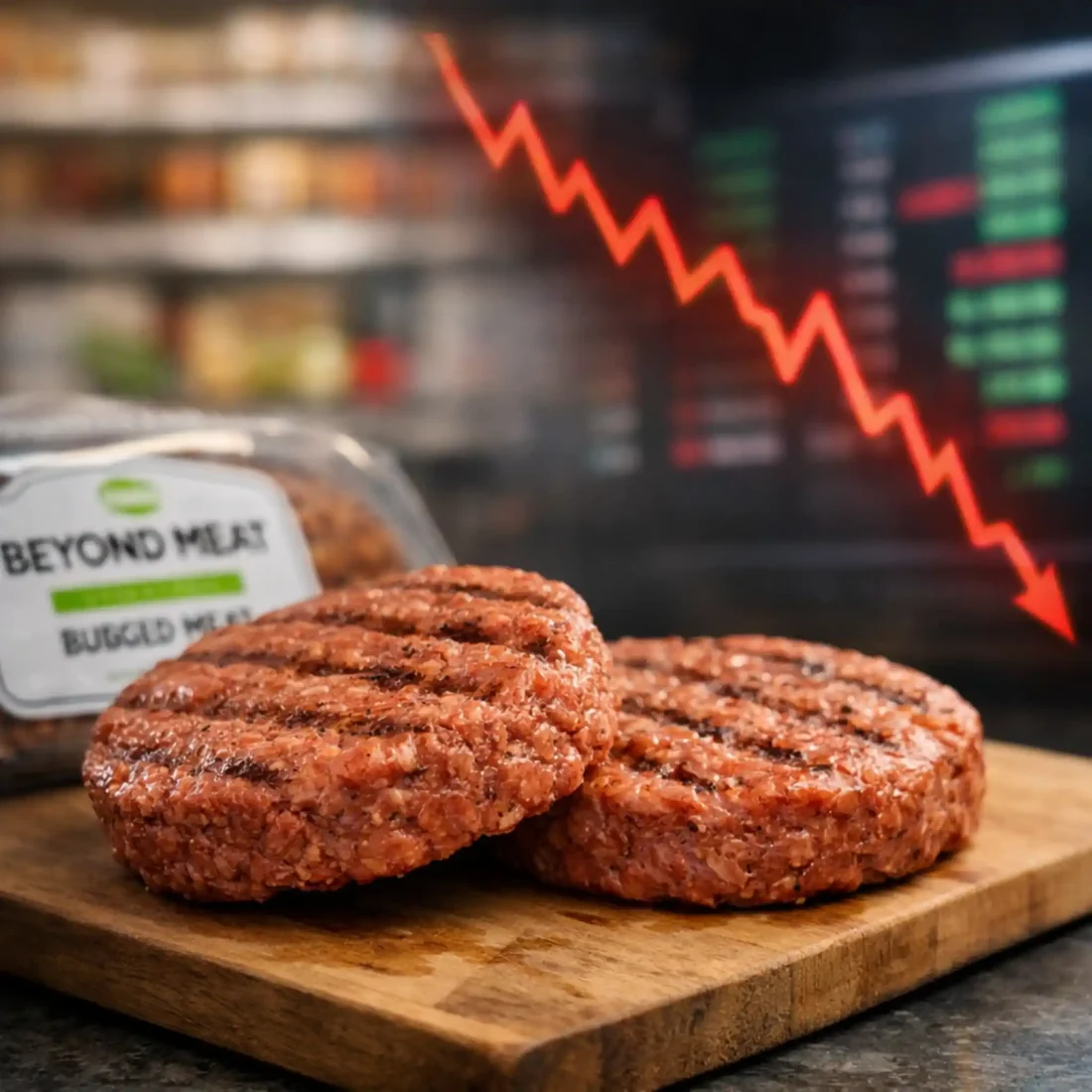
Beyond Meat, a category leader in the Food sector's plant-based segment, filed its 10-K for fiscal year 2022 with the SEC on 28 February 2023. The filing states that net revenues decreased to $418.9 million in 2022 from $464.7 million in 2021, a 9.8 percent reduction. That is the first full-year revenue decline the company has recorded as a public filer since its 2019 listing, reversing several years in which annual revenue had grown.
The evidence
The 10-K attributes the fall to several named factors together rather than one, citing "softness in demand" in the plant-based category alongside macroeconomic pressure — inflation, rising rates and recession concerns — and increased competition. That is a company describing its own results, filed under penalty of law for material misstatement, which gives it more weight than a press quote but does not make it independent of the company's own framing. A second document, the SEC's EDGAR filing index for Beyond Meat, confirms the filing date and accession number and shows the company has filed a 10-K in each year since 2020, giving the 2022 decline a comparable run of prior annual filings rather than a single isolated figure.
Timeframe and confidence
Confidence is high on the headline figures: a 9.8 percent fall in net revenue for the twelve months to 31 December 2022, stated by the company in a filing subject to SEC disclosure rules. Confidence is lower on causation, since the filing names four contributing factors without weighting them, and this piece has not opened a document that isolates volume sold from price per unit, or breaks the change down by US retail, foodservice or international channels. Reading "demand softness" and "increased competition" as a single explanation would flatten a disclosure that names both a category-wide and a company-specific pressure without separating their contributions.
What would change the reading
A quarter-by-quarter volume and price breakdown, or a later filing's year-over-year comparison isolating unit economics, would show whether the decline was driven mainly by fewer units sold, lower prices per unit, or category-wide retreat by competing brands. A subsequent year's 10-K showing whether revenue stabilised, kept falling or recovered would also test whether 2022 was an inflection or a single bad year.
- Does a stated revenue decline separate volume sold from price realised, and which one moved more?
- When a filing names several contributing factors together, does any other disclosure in the same document weight them?
- Is a single company's results being read as a category signal, and does a rival's filing over the same period agree or diverge?
A 10-K's revenue line is a record of what a company reported for a stated period, not a verdict on a category's future. What it does establish here, precisely because Beyond Meat was an early scale leader in plant-based meat, is that a leading firm's own filing recorded broad-based softness rather than a single, isolated cause.
Source trail
- Beyond Meat, Inc. Form 10-K for the fiscal year ended December 31, 2022www.sec.gov · Source publication: 2023-02-28 · Retrieved 2026-09-16
States 2022 net revenues of $418.9 million versus $464.7 million in 2021, a 9.8 percent decrease, and the company's stated reasons for the fall.
- EDGAR filing history for Beyond Meat, Inc. (CIK 0001655210), Form 10-Kwww.sec.gov · Source publication: not established · Retrieved 2026-09-16
Confirms the filing date and accession number of the fiscal-2022 10-K and lists prior years' annual filings.
- Event date
- 2022-12-31
- First source date
- 2023-02-28
- Source-record publication
- Not supplied — draft retained
- Preparation
- 2026-09-16