fao.org · Original source page
Image provenance
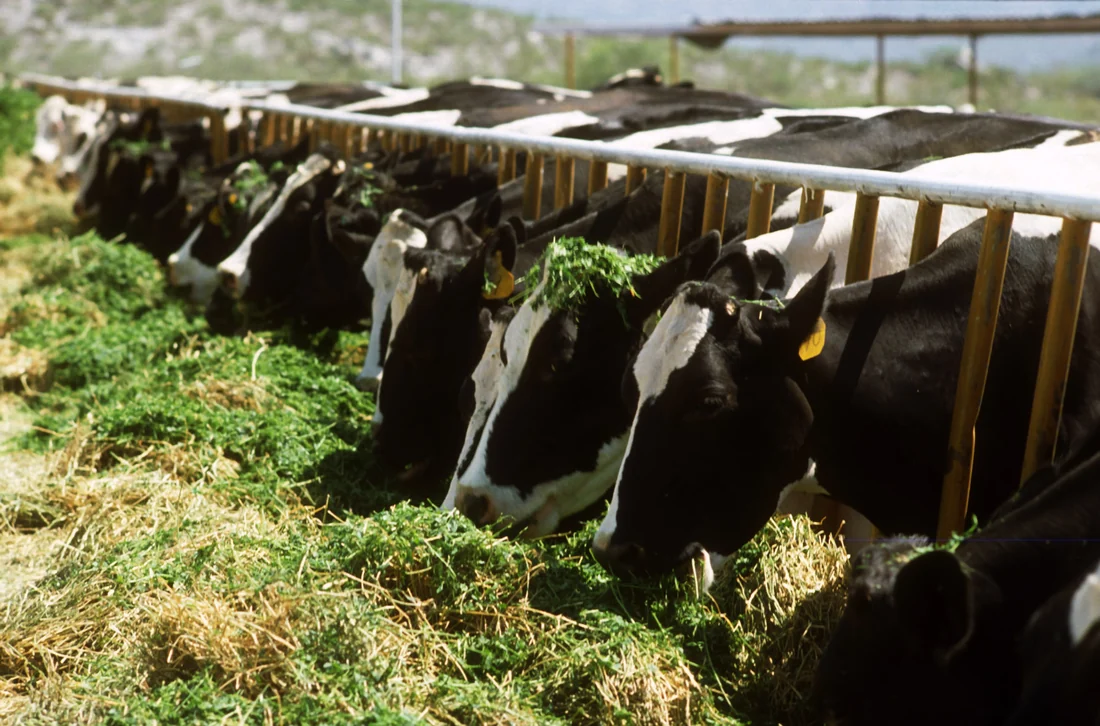
Inherited source visual. Image capture date and exact event relationship were not established again in this expansion. Owner publication review pending; credit does not grant permission.
Original assetThe signal
The FAO Food Price Index, the Food sector's benchmark for world food-commodity prices, tracks five commodity groups — cereals, vegetable oils, dairy, meat and sugar — weighted by export shares, on a base where the 2014-2016 average equals 100. FAO's release for February 2022, published 4 March 2022, put the index at 140.7, up 3.9 percent on January and 20.7 percent on a year earlier, 3.1 points above the previous record set in February 2011. Vegetable oils rose 8.5 percent to their own record; dairy rose 6.4 percent; cereals rose 3.0 percent; bovine meat reached a record within a 1.1 percent rise in the meat sub-index; sugar alone fell, down 1.9 percent.
The evidence
The February release is candid about its own limits. Russia's invasion of Ukraine began on 24 February, five days before the month closed, and the release says the reading "only partly incorporates" the conflict's market effects, citing concerns over Black Sea sunflower-oil exports and Ukrainian maize. A monthly-average index blends the days before a shock with the days after, so a five-day window inside a 28-day month understates what follows. A second document, FAO's own current Food Price Index page, confirms a fuller reading came next: it puts August 2026's 133.3 at 26.9 points, or 16.8 percent, below what it calls the "peak reached in March 2022," naming March, not February, as the series' high point. The page does not restate the original March value — a limit of a live series over a dated release — but the gap fits a March reading well above February's 140.7.
Timeframe and confidence
This reading joins two FAO documents years apart, not one source stating a peak and its cause together. Confidence is high that February 2022 was a record at publication and only partly war-exposed by FAO's own account, and high, from the current page's arithmetic, that March 2022 is the series' recorded peak. Confidence is lower on the exact March figure, since the only citable statement of it is a difference against a 2026 reading.
What would change the reading
A dated FAO release specific to March 2022 would let this entry cite the original value directly rather than derive it. A rebasing of the series — FAO periodically revises weights and the base period — would also change how a historical value compares with today's.
- Does a cited index reading cover a shock's full period of exposure, or only part of one?
- When a live statistical page is the source, does it restate historical values or only their distance from a current one?
- Is a price move concentrated in one commodity sub-index or spread across the basket, and what does that say about supply versus demand?
None of this tells a strategist where food prices go next; the series records what happened to a weighted basket, not what follows. What it shows, because the February release flagged its own incompleteness, is how a war that started five days before month-end moved from a partial reading to the fuller one FAO's page later measured against.
Source trail
- FAO Food Price Index rises to record high in Februarywww.fao.org · Source publication: 2022-03-04 · Retrieved 2026-09-16
Records the February 2022 index value of 140.7, its component moves, and states the reading only partly reflects the Ukraine conflict's market effects.
- FAO Food Price Indexwww.fao.org · Source publication: not established · Retrieved 2026-09-16
FAO's current index page states the March 2022 reading was the series' peak and gives the point gap between a later reading and that peak.
- Event date
- 2022-03-01
- First source date
- 2022-03-04
- Source-record publication
- Not supplied — draft retained
- Preparation
- 2026-09-16