euperspectives.eu · Original source page
Image provenance
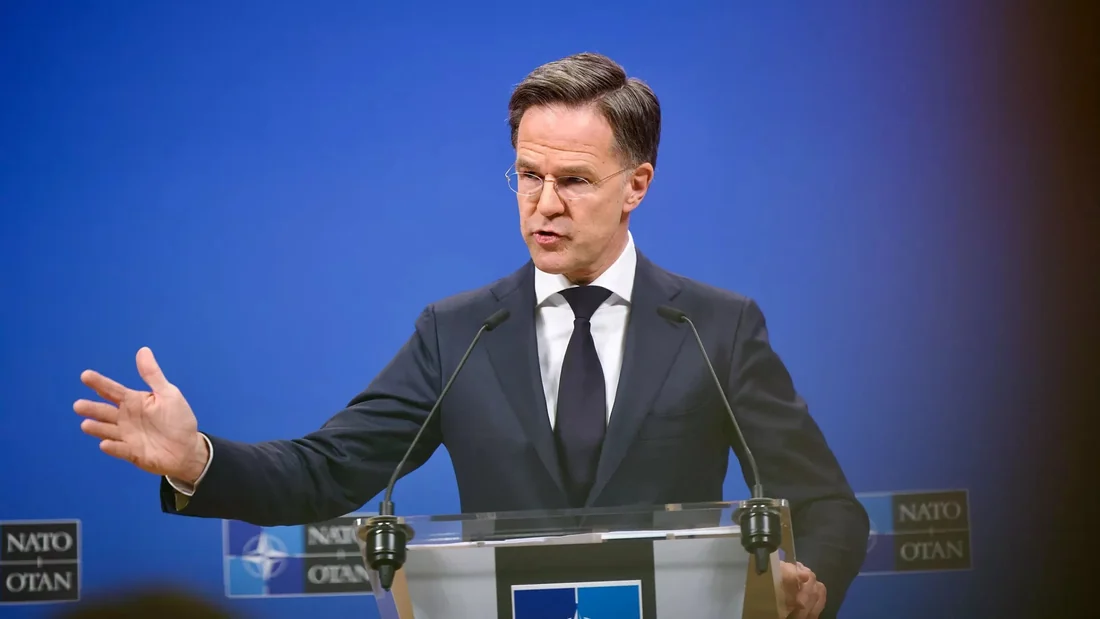
Inherited source visual. Image capture date and exact event relationship were not established again in this expansion. Owner publication review pending; credit does not grant permission.
Original assetThe signal
On 17 June 2024, NATO published its annual defence-expenditure estimates, an aerospace- and defence-sector release with a specific finding: a clear majority of the alliance's members were estimated to meet or exceed the guideline of spending 2% of GDP on defence that year. NATO's own estimates document, whose data has a stated cut-off of 12 June 2024, shows the number of Allies meeting the 2% guideline rising to 23 in its 2024 estimate, a figure the document itself labels '2024e', meaning it is an estimate, not an audited final figure. The guideline itself dates to the 2014 Wales Summit, where, per NATO's own explainer, allies agreed a '2% of their national GDP to defence spending' guideline alongside a second target that 'at least 20% of defence expenditures should be devoted to spending on major equipment'.
The evidence
The estimates document is NATO's own compilation from each ally's Ministry of Defence, using a common definition it sets out explicitly: expenditure counted is 'payments made by an Allied national government... specifically to meet the needs of' its own forces, other allies, or the alliance, calculated using data from the European Commission's DG ECFIN and the OECD. The document warns that, because of these choices, 'the figures shown in this report may considerably diverge from those that are referenced by media, published by national authorities or given in national budgets', a caution against treating 2% as comparable to a country's own domestic budget line. The alliance also grew over the period: the document's own footnotes record Montenegro joining in 2017, North Macedonia in 2020, Finland in 2023 and Sweden in 2024, so the membership measured against the guideline expanded even as the share meeting it rose.
Timeframe and confidence
Confidence in the 23-ally figure as NATO's own stated 2024 estimate is high, drawn directly from the alliance's published data with an explicit cut-off date. Confidence that this represents final, audited spending is low, because the document labels 2023 and 2024 figures as estimates throughout, to be revised once national accounts close. This is an editorial distinction between a mid-year projection and a settled fiscal outcome.
What would change the reading
NATO's next annual release, which typically restates a prior estimate against later figures, would show how much the 2024 estimate moves once accounts are closer to final. A breakdown of how much of the increase is equipment spending, against the alliance's separate 20%-of-spending equipment guideline, would show whether higher totals are converting into procurement.
- How much does NATO's 2024 estimate for any one ally change once accounts are closer to final?
- Is the rise driven by higher spending, or by GDP growth slowing relative to budgets, raising the ratio without new spending?
- What share of the increase is going to equipment procurement, as opposed to personnel or operating costs?
A guideline met by a majority of an alliance a decade after it was set is a real shift in stated intent. Whether that intent has converted into equipment, and whether the figures survive revision, are questions the document flags but does not answer.
Source trail
- Defence Expenditure of NATO Countries (2014-2024)www.nato.int · Source publication: 2024-06-17 · Retrieved 2026-09-16
Gives the 2024 estimate of 23 allies meeting the 2% guideline, the defence-expenditure definition, and the membership-growth footnotes.
- Funding NATOwww.nato.int · Source publication: not established · Retrieved 2026-09-16
Documents the 2014 Wales Summit origin of the 2% guideline and the separate 20%-on-equipment guideline.
- Event date
- 2024-06-17
- First source date
- 2024-06-17
- Source-record publication
- Not supplied — draft retained
- Preparation
- 2026-09-16