cimg.co · Original source page
Image provenance
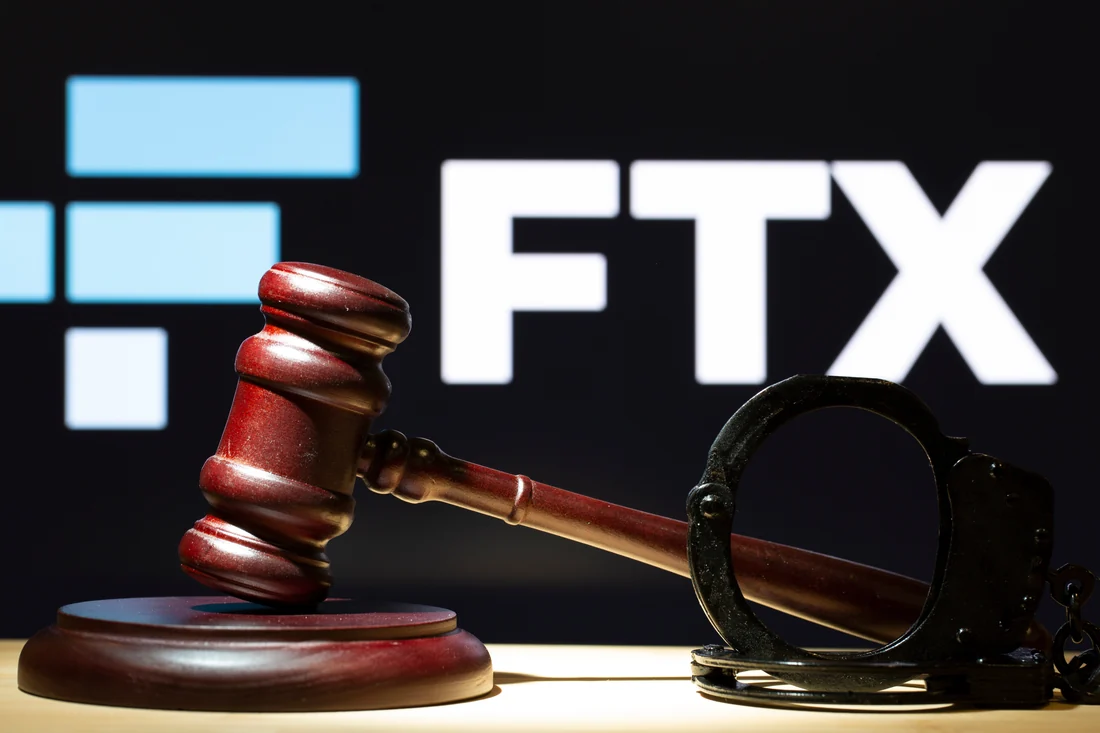
Inherited source visual. Image capture date and exact event relationship were not established again in this expansion. Owner publication review pending; credit does not grant permission.
Original assetThe signal
In the Crypto sector, the SEC's civil complaint against Samuel Bankman-Fried, filed 13 December 2022 in the Southern District of New York as Civil Action No. 22-cv-10501, records that FTX, Alameda and their "tangled web of affiliated entities" filed for bankruptcy on 11 November 2022. The complaint charges Bankman-Fried with violating Section 17(a) of the Securities Act of 1933 and Section 10(b) of the Securities Exchange Act of 1934, alleging he raised more than $1.8 billion from investors while diverting FTX customer funds to his trading firm, Alameda Research. As recorded here, this is a charge, not a verdict; this piece does not open a document recording any later plea, conviction or judgment, and names none.
The evidence
The complaint's own account, which this piece treats as an allegation rather than a proven fact beyond what a later document would need to confirm, describes a mechanism: Alameda received a "virtually unlimited" line of credit funded by platform customers and was exempted from FTX's risk controls, and when crypto asset prices fell in May 2022 and Alameda's lenders demanded repayment, Bankman-Fried is alleged to have directed FTX to divert billions more in customer assets to Alameda. A second SEC document, its press release announcing the charges, summarises the same allegations for a public audience without adding new factual claims, confirming the 13 December 2022 charge date and the alleged scheme's basic shape.
Timeframe and confidence
Confidence is high on what is documented: a bankruptcy filing dated 11 November 2022 and SEC civil fraud charges dated 13 December 2022, both stated in the same primary filing. Confidence is necessarily limited to "charged," the status this piece can source, and does not extend to any criminal outcome, since no DOJ or court document recording one was opened here. A civil complaint is one party's pleaded case; its factual narrative is what the SEC alleges and is required to prove, not an adjudicated finding on its own.
What would change the reading
A dated DOJ press release or court judgment recording a plea, verdict or sentence would let a future entry state a resolved legal outcome rather than a charge. Bankruptcy-court filings detailing recovered assets or creditor distributions, opened directly, would show what portion of diverted customer funds was ultimately recovered.
- Is a legal proceeding's current stage being named accurately as charged, pleaded, convicted or settled, rather than collapsed into a single word?
- Does a single counterparty's failure reveal a structural feature of a market, or a specific firm's specific conduct?
- What share of customer assets, once a case concludes, is actually recovered versus written off, and over what period?
The two SEC documents establish a bankruptcy date, a charge date and an alleged mechanism; a strategist reading a counterparty-failure signal here should treat the legal case's ultimate resolution as a separate, later fact still to be verified against its own primary record.
Source trail
- SEC v. Samuel Bankman-Fried, Complaint (Civil Action No. 22-cv-10501, S.D.N.Y.)www.sec.gov · Source publication: 2022-12-13 · Retrieved 2026-09-16
The filed complaint itself, recording the 11 November 2022 bankruptcy filing and charging securities fraud with a detailed factual narrative of the alleged scheme.
- SEC Charges Samuel Bankman-Fried with Defrauding Investors in Crypto Asset Trading Platform FTXwww.sec.gov · Source publication: 2022-12-13 · Retrieved 2026-09-16
SEC's public announcement of the charges, confirming the charge date and summarising the alleged diversion of customer funds.
- Event date
- 2022-11-11
- First source date
- 2022-12-13
- Source-record publication
- Not supplied — draft retained
- Preparation
- 2026-09-16