substackcdn.com · Original source page
Image provenance
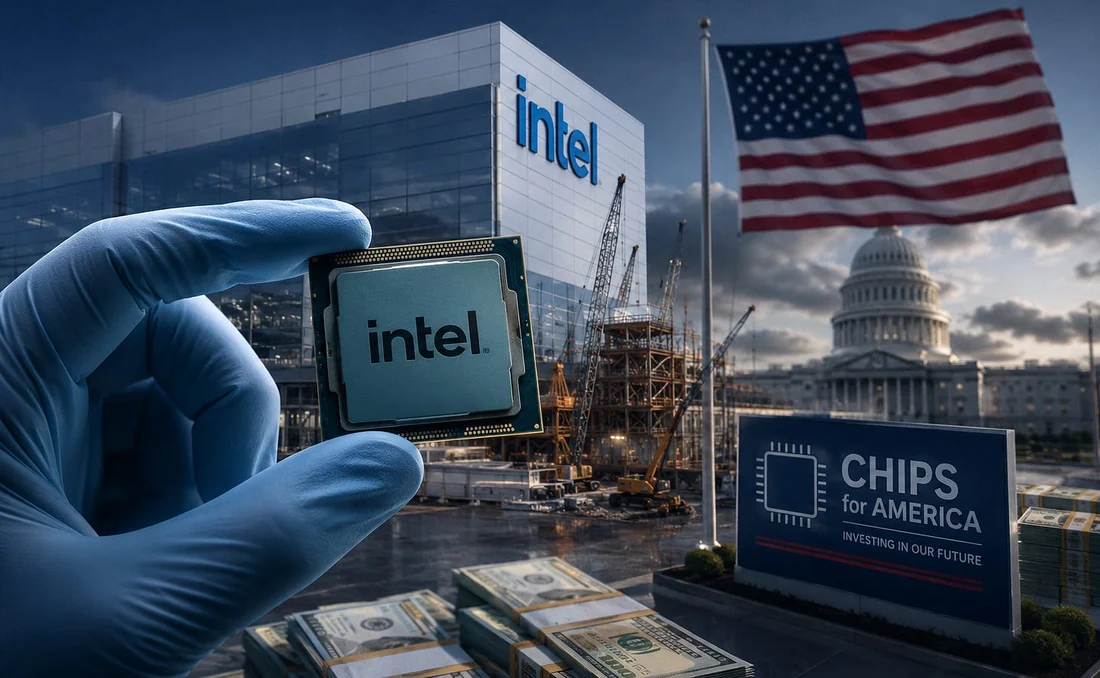
Inherited source visual. Image capture date and exact event relationship were not established again in this expansion. Owner publication review pending; credit does not grant permission.
Original assetThe signal
H.R. 4346, the CHIPS and Science Act, became Public Law No. 117-167 on 9 August 2022, part of Signal Atlas's semiconductor sector. Division A of the act, titled the CHIPS Act of 2022, establishes several funds, including the CHIPS for America Fund, aimed at incentives to produce semiconductors domestically, and separate CHIPS for America Defense and Workforce and Education funds.
The evidence
The NIST CHIPS for America programme page, which administers a share of the funding, states that the CHIPS and Science Act 'provided the Department of Commerce with $50 billion,' split between a CHIPS Research and Development Office holding $11 billion and a CHIPS Program Office holding $39 billion 'to provide incentives for investment in facilities and equipment.' This page is a living document, describing the programme as it stood when retrieved on 16 September 2026, and it names ongoing award activity rather than a closed, historical total. The two sources establish different things: the congressional record fixes the law's date and structure, while the agency page describes how the appropriated funds are organised and, as a current page, how the department frames the money it is still deploying.
Timeframe and confidence
The law's passage date and text are settled facts, drawn from the legislative record itself. The $50 billion figure is well corroborated by the implementing agency, though it describes an appropriation and its planned use, not manufacturing output achieved with it. This is an editorial distinction worth holding onto: a subsidy is a signal about how a government perceives supply-chain risk, not a measurement of chips actually produced as a result.
What would change the reading
Confirmed award announcements naming specific fabs, dollar amounts, and production timelines would let the appropriation be traced into planned capacity. A pattern of awards delayed or withdrawn would weaken the reading that the appropriation reliably converts into new manufacturing.
- How much of the $50 billion has been obligated to named recipients, as distinct from appropriated but unspent?
- Do award recipients' own disclosures show construction timelines matching the incentive structure?
- Does the act change where new fabs are sited, or mainly the pace at which already-planned fabs proceed?
A law signed and a sum appropriated are not the same as chips manufactured. The distance between those two facts is exactly what a subsidy's later award record would need to close.
Source trail
- H.R.4346 - CHIPS and Science Actwww.congress.gov · Source publication: 2022-08-09 · Retrieved 2026-09-16
Records the bill becoming Public Law No. 117-167 on 9 August 2022 and the structure of Division A's CHIPS Act funds.
- CHIPS for Americawww.nist.gov · Source publication: not established · Retrieved 2026-09-16
States the $50 billion total split between an $11 billion R&D office and a $39 billion incentives program office.
- Event date
- 2022-08-09
- First source date
- 2022-08-09
- Source-record publication
- Not supplied — draft retained
- Preparation
- 2026-09-16